

When you’re looking for a new role you need to showcase your skills and experience to a potential employer, but many candidates fall at the first hurdle with CV mistakes that could stop them getting the job of their dreams.
A decent CV is vital for potential employers to consider inviting you for an interview. Yet many people make simple errors which immediately make a recruiter file it in the virtual bin, their deleted files folder, never to be seen again.
A professional email address
Our first tip for an impressive CV is simple. Use a sensible, professional email address. It can be as simple as your name @outlook.co.uk or @gmail.com. Even if you have to add some numbers, e.g. johnsmith12345, this is by far the easiest option. If you do have something different, think about whether it would put off a potential employer.
Email addresses to avoid include ones like sexymumma@, hotchick@ and fluffybunny@. Yes, these are real email addresses our team have seen on CVs. These types of addresses really don’t inspire confidence that the owner is the right person for a responsible, customer-facing role that a client is looking to fill.
The simple solution is to create a new email address just for jobhunting if you can’t bear to part with your usual one. Set it up on your phone and make sure notifications are on so that you’ll know if somebody has invited you for an interview. Being able to respond to recruiters quickly is vital and might give you the edge ahead of the competition.
Social media profile photos
Make sure your social profile photos are sensible, particularly on LinkedIn which should ideally showcase you in a professional light. Although Facebook, Twitter and Instagram are more casual, while you’re trying to impress recruiters you really don’t want to put them off with an inappropriate image.

Social profiles
Depending what you post, it’s also important to make your profiles private if you don’t want a future employer to see your recent antics on a stag do. If you have posts which include swearing, or controversial opinions on a subject then it might be best to restrict who can see them so they are not public.
Spellcheck, spellcheck, spellcheck
We can’t emphasise this enough – it’s absolutely vital to spellcheck your CV. Not only that, check for grammar and punctuation mistakes too. A well-written CV is so much more impressive than one littered with errors.
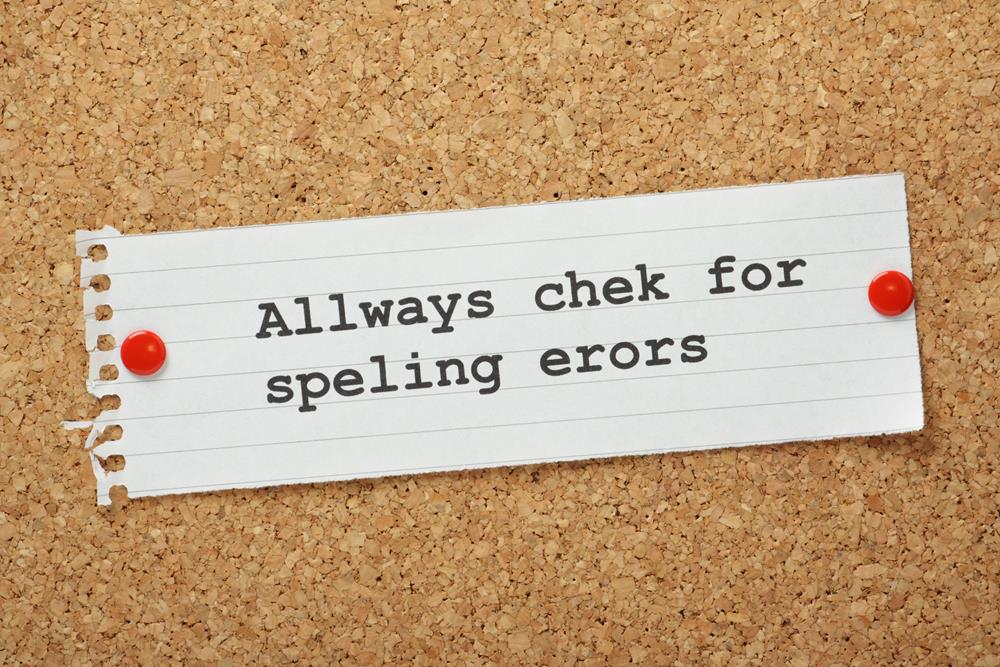
Ideally, ask a friend to proofread it for you. You are bound to have a grammar and spelling geek in your social circle who will be delighted to show off just how pernickety they are. This is when their annoying obsession comes into its own!
At the very least, if you can’t find anyone qualified to review your CV, then use grammarly.com to check it over for you. It’s a free online tool that will find mistakes in your CV document, although it’s important to remember that IT ISN’T FOOLPROOF. Many issues slip through the net but it’s better than nothing.
Use bulleted lists
Many CVs are so wordy and difficult to read that prospective employers will dismiss them very quickly. Your CV must be easy on the eye and simple for the person who is reading it to pick out the keywords that they are searching for, to check that you’re right for the role.
If you are listing anything, whether it’s key skills, qualifications or professional bodies you belong to, use a bulleted list. Bear in mind that some employers get hundreds of CVs to sift through so you need to make it as easy as possible for them.
For example, compare the following examples to see how much easier it is to read a bulleted list.
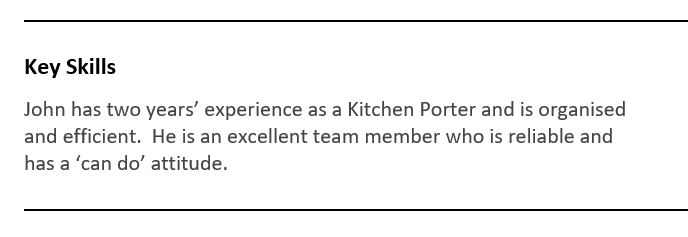
Example 1 : Sentence
This first layout is written in sentences and although it’s neat and concise, you still have to search to pick out the key words that you’re looking for.
Example 2 : Bulleted list
The second example is a bulleted list which delivers the same information as the sentence but in a list format that is really easy to skim read.

Start with the most recent job and work backwards
When you’re writing your employment history start with the most recent job and work backwards. Don’t start with the junior position you had ten years ago as it is unlikely to be particularly relevant now. Start with your current position and include your job title, employer and start/end dates. Then list the key achievements, skills or experience that you gained during that role. Use a bulleted list!
Then move to your previous job and list that next, and then the one before that, and so on. Unless your previous experience is relevant for the role you’re applying for you don’t need to list all your achievements at every job, especially if you’ve had a long career and lots of employers.

If you’ve had a lot of temp jobs then just list the employers, dates and job titles, with a summary below of the key skills you developed as a result.
Don’t use boring hobbies!
For the ‘hobbies and interests’ section you don’t need to write War And Peace – a couple of sentences will do. Try to think of something interesting though, not just the usual ‘socialising, going to the cinema and reading’. The main point of this section is to provide a talking point for an interviewer, so try to think of something interesting. If you have an unusual hobby, have achieved something special (for example raising money for charity), or have travelled somewhere a bit different then include a few words about it.
Here are some ideas:
– do you play a musical instrument?
– do you have an unusual qualification, e.g. referee?
– do you grow your own vegetables? Keep bees?
– do you have a sideline in DJing or playing in a band?
– are you planning a challenge like a triathlon?
Offer references on request
There is no need to include reference details on a CV. After your hobbies section just add a line to say that references are available on request.
Don’t use the same CV for every job you apply for
One of the most common CV mistakes is to use the same document for every job you apply for. You should tailor your CV for each role or recruitment agency, focusing on what the job specification is asking for. Check the advert and demonstrate how you have the relevant skills, experience and ambitions. Tweak the experience you’ve gained in previous roles and adjust your personal statement at the top of the CV to focus on what is required in the job spec.
Use our template to create a great CV
We offer a FREE CV TEMPLATE for you to build a great CV. It lists each section with examples of what to include and is easy for you to add your own information.
Use the Summerley Recruitment CV service
The best way to avoid common CV mistakes is to let us take care of your CV. We offer a CV service where we create a professional CV for you to help you stand out when applying for a role.
Follow this link to find out more.